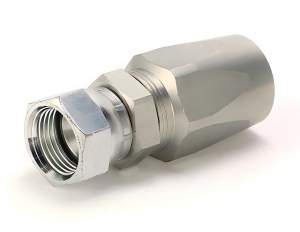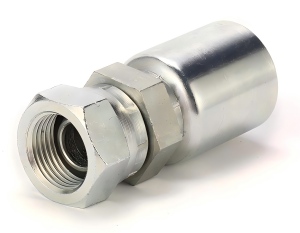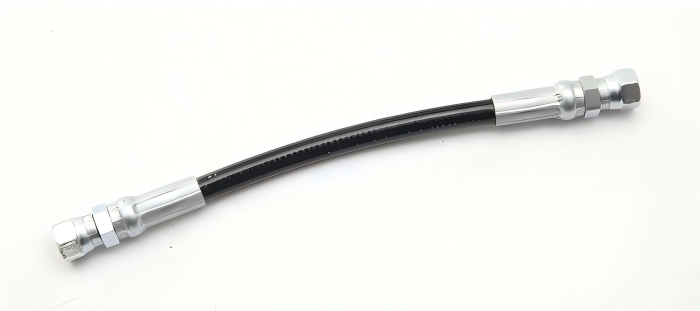


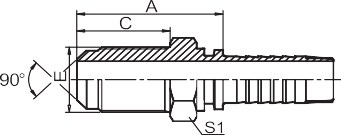
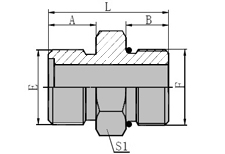
Hydraulic Hose Fittings
Hydraulic hose fittings are specialized connectors used in hydraulic systems to connect hydraulic hoses with other hydraulic components, enabling the flow and sealing of pipelines. Currently, this blog provides the following core introduction:
1. Core Definition and Function
They belong to a subcategory of hydraulic tube fittings and are mainly used with wire-braided high-pressure rubber hoses. Their core function is to connect pipelines in high-pressure hydraulic environments, while ensuring sealing performance, preventing hydraulic oil leakage, and withstanding the high-pressure conditions of hydraulic systems. Ordinary fittings can withstand up to 0.5 bar, whereas specialized hydraulic hose fittings can withstand hundreds of bars of high pressure and cannot be replaced with ordinary fittings.
2. Common Types and Structures
Hydraulic hose fittings are mainly divided into two types: reusable and crimped:
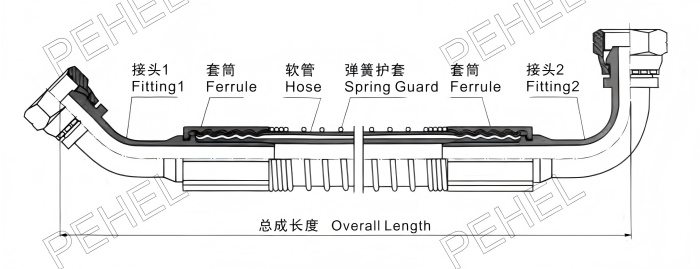
l Reusable: Consists of a joint nut, joint body, outer sleeve, and rubber hose. After tightening the nut, the rubber hose is compressed to achieve a sealed connection. The structure is simple and can be replaced.
l Crimped type: Composed of a joint nut, joint core, joint sleeve, and rubber hose. After removing the rubber on the hose's outer rubber, it is compressed and contracted on a press press, allowing the tapered teeth inside the joint sleeve to embed into the steel wire layer. This provides higher sealing and connection strength, making it the mainstream application form in the industry.
In addition, there are subdivided types such as integrated, internally locked, and three-valve types. The three-valve assembly does not require removing the outer rubber and can accommodate hoses with slightly different outer diameters.
3. Installation and usage notes:
l Reserved length: When pressurized, hydraulic tubing elongates by 0~2% and shrinks by up to 4%. Additional length must be reserved when cutting hoses to avoid damaging the reinforcement layer and shortening its service life.
l Avoid twisting: Even a 5% twist can reduce hose life by 60%-70%. Try to bend the tube in the same plane, and if unavoidable, use a rotary joint to mitigate it.
l Anti-abrasion protection: Use appropriately sized pipe clamps to secure the hose and avoid friction with sharp corners; Under harsh working conditions, nylon sleeves, plastic spiral winding, or galvanized steel wire protective sleeves can be added to enhance wear resistance.
l Sealing Matching: Select the corresponding transition joint according to the thread type of the hose joint. Most hydraulic quick-change fittings come with a built-in concave-convex sealing structure, so no additional rubber ring is required.