

Demystifying Stainless Steel Magnetism: Austenitic vs Martensitic
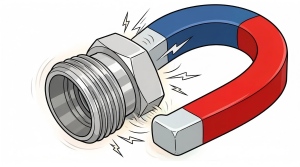
Not all stainless steel is "non-magnetic." Whether it attracts a magnet depends on its internal microstructure. Austenitic stainless steels are generally non-magnetic, while martensitic and ferritic grades are magnetic. This article explains the differences, the cause of magnetism, and how heat treatment can alter this property.
1. Why Are Some Stainless Steels Magnetic?
Magnetism in stainless steel is directly linked to its crystal structure:
· Austenitic Stainless Steels: Face-centered cubic (FCC) structure, chromium-nickel alloys (e.g., 304, 316). Typically non-magnetic.
· Martensitic Stainless Steels: Body-centered tetragonal (BCT) structure, high carbon & chromium (e.g., 410, 420). Magnetic.
· Ferritic Stainless Steels: Body-centered cubic (BCC) structure (e.g., 430, 443). Magnetic.
2. Why is Austenitic Stainless Steel Usually Non-Magnetic?Austenitic grades (300 series) are metastable at room temperature. Their lack of magnetism is due to:
· The FCC crystal structure, which impedes the formation of magnetic domains.
· High nickel content (>8%) stabilizes the austenite phase.
· Cold working (e.g., bending, cutting) can induce partial transformation to martensite, creating slight magnetism.
3. Controlling Magnetism Through Heat Treatment3.1 Demagnetizing Treatments (for Martensitic/Ferritic Grades)
Solution Annealing: Heat to 1040-1150°C, then quench rapidly.
Dissolves carbides, forms homogeneous austenite.
Used for work-hardened components.
Tempering Process Control:
Medium-temperature tempering (400-600°C) reduces residual stress.
Combined with controlled cooling to manage phase transformation.
3.2 Making Steel More Magnetic
Cold Rolling/Drawing: Induces austenite-to-martensite transformation.
Cryogenic Treatment: Deep freezing below -70°C increases martensite content.